Call 0787 4838 892

DIY vs Professional Plumbing: What You Can Fix Yourself and What You Shouldn’t Touch
It’s tempting to try and fix plumbing problems yourself — especially with so many “quick fix” videos online. And while some small jobs are perfectly safe for homeowners to tackle, others can quickly turn into expensive disasters.
This guide breaks down what you can safely do yourself and when you should call a professional plumber or heating engineer to avoid bigger problems.
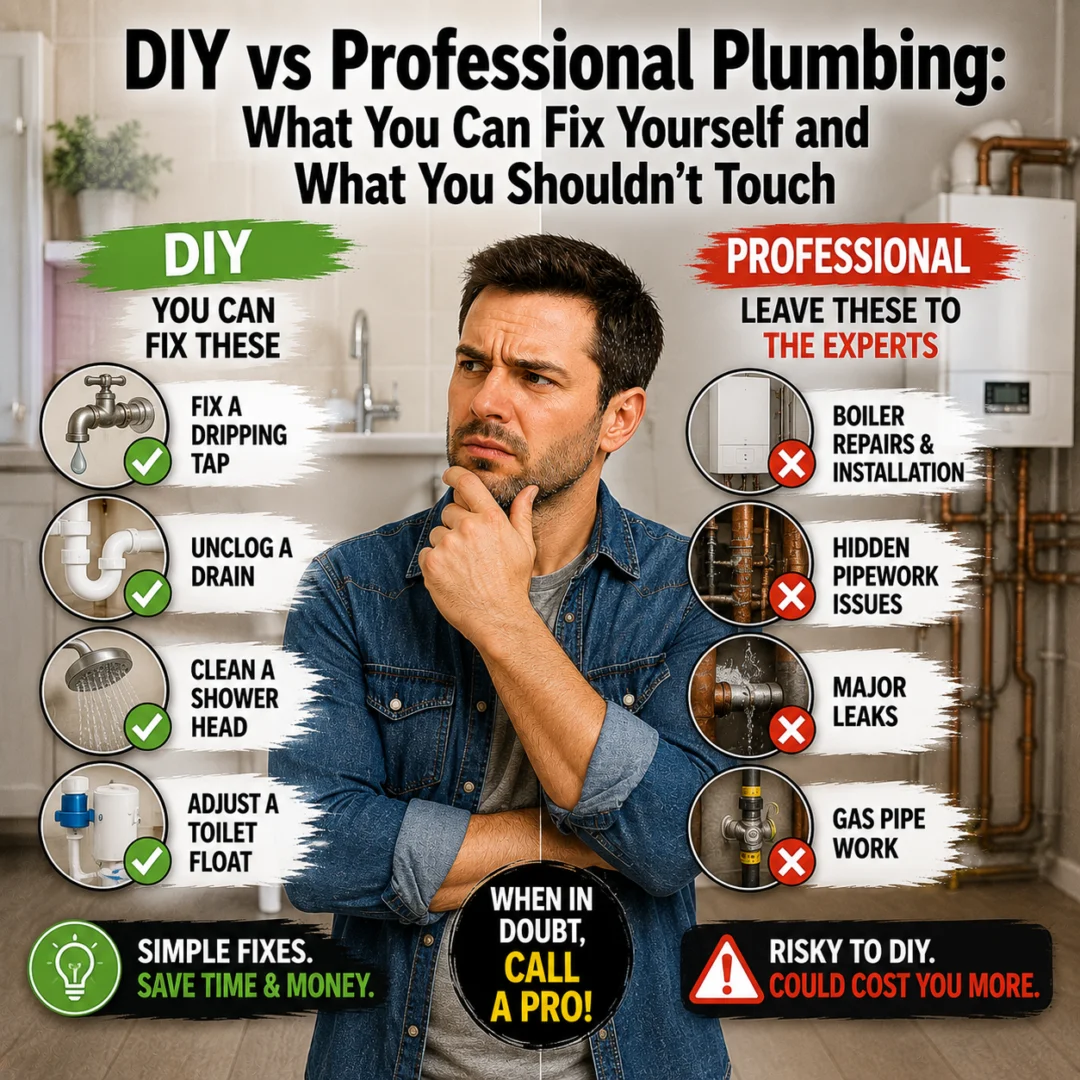
What You Can Fix Yourself
1. Unblocking a Simple Sink or Basin
If the blockage is in the U‑bend and you can see the debris, it’s usually safe to:
- Place a bucket underneath
- Unscrew the trap
- Clean it out
- Refit it securely
If the blockage keeps returning, that’s a sign of a deeper issue.
2. Bleeding Radiators
Cold spots at the top of radiators are usually caused by trapped air. Bleeding them is simple:
- Turn off the heating
- Use a radiator key
- Release the air until water flows steadily
If the radiator still doesn’t heat properly, the system may need balancing or flushing.
3. Replacing Tap Washers
A dripping tap is often caused by a worn washer. If you’re confident turning off the water supply and using basic tools, this is a straightforward DIY job.
4. Resetting Boiler Pressure (If Safe to Do So)
If your boiler pressure has dropped slightly, topping it up using the filling loop is usually fine — as long as you follow the manufacturer’s instructions.
But if the pressure keeps dropping, that’s a sign of a leak or a failing component.
What You Should Never DIY
1. Anything Involving Gas
If your boiler, gas fire, or gas pipework is involved, stop immediately. Only a Gas Safe registered engineer is legally allowed to work on gas appliances.
2. Persistent or Hidden Leaks
A small drip can quickly turn into:
- Structural damage
- Mould
- Rotting floors
- Burst pipes
If you can’t see the source of the leak, call a professional before the damage spreads.
3. Boiler Repairs
Boilers are complex, pressurised systems. Attempting repairs yourself can be dangerous and will often void your warranty. If your boiler is:
- Making noises
- Losing pressure
- Not firing up
- Showing error codes
…it’s time to call a heating engineer.
4. Major Blockages
If plunging or clearing the trap doesn’t work, the blockage is deeper in the system. DIY chemicals can damage pipes and make the problem worse. A professional has the right tools to clear it safely.
5. Anything Involving Central Heating Pipework
Heating systems require specialist tools and knowledge. DIY attempts can cause:
- Leaks
- Airlocks
- Pressure issues
- Boiler faults
If it’s more than bleeding a radiator, leave it to a professional.
Why Calling a Professional Can Save You Money
DIY fixes often seem cheaper — until something goes wrong. A professional plumber or heating engineer can:
- Diagnose the real cause of the problem
- Prevent future issues
- Protect your boiler warranty
- Ensure your home stays safe
In many cases, getting it done properly the first time is far cheaper than repairing a DIY mistake.
Final Thoughts
DIY can be great for small, simple jobs. But when it comes to leaks, boilers, gas, or anything hidden behind walls or under floors, calling a professional is the safest and most cost‑effective option.