Call 0787 4838 892

Why Your Boiler Keeps Losing Pressure — And When It’s Time to Call a Heating Engineer
A boiler losing pressure is one of the most common heating issues UK homeowners face. You might notice your radiators aren’t heating properly, the boiler keeps cutting out, or you’re constantly topping up the pressure. While it’s often a simple fix, repeated pressure loss usually means something deeper is going on.
Here’s what causes boiler pressure to drop — and when it’s time to call a professional heating engineer.
What Boiler Pressure Actually Means
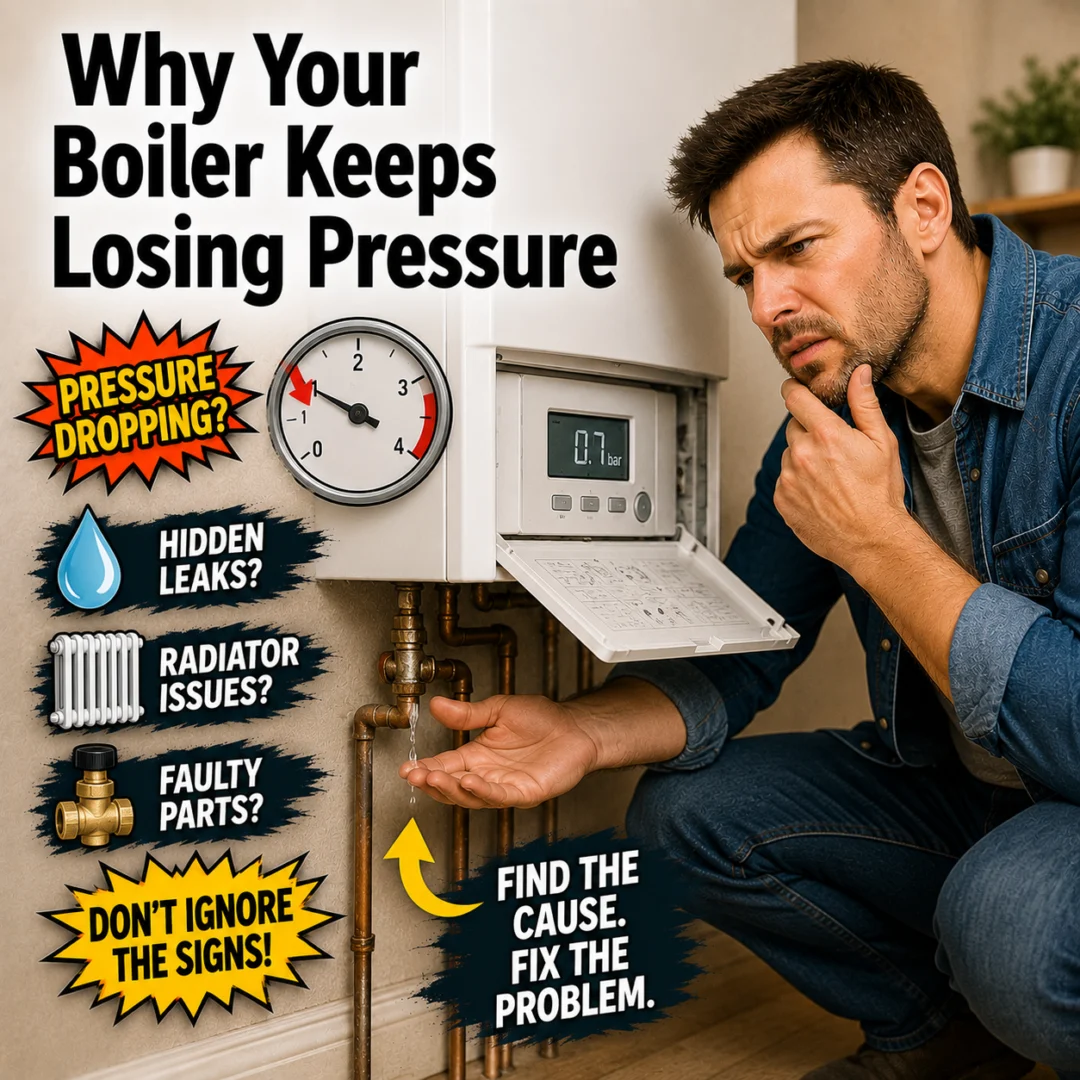
Your boiler and central heating system are sealed and pressurised. This pressure allows hot water to circulate through your radiators. Most boilers operate best between 1 and 1.5 bar when cold.
If the pressure drops too low, the boiler will shut down to protect itself.
Common Reasons Your Boiler Loses Pressure
1. A Leak Somewhere in the Heating System
Even a tiny leak can cause pressure to drop over time. These leaks often occur in:
- Radiator valves
- Pipe joints
- Underfloor heating circuits
- Boiler components
You may not always see water — some leaks evaporate or are hidden under floors or behind walls.
2. A Faulty Pressure Relief Valve (PRV)
The PRV releases pressure if the system gets too high. If it becomes faulty or stuck open, it can slowly release water and cause pressure loss.
A tell‑tale sign is water dripping from the copper pipe outside your home.
3. A Problem With the Expansion Vessel
The expansion vessel absorbs pressure changes as the water heats and cools. If the internal diaphragm fails or loses air charge, the system can’t regulate pressure properly — leading to frequent drops.
This is a job for a qualified heating engineer.
4. Bleeding Radiators
Bleeding radiators releases air — but it also releases a small amount of pressure. If you’ve recently bled several radiators, you may need to top up the system.
If pressure drops again soon after, there’s another issue at play.
5. A Fault Inside the Boiler
Internal components such as:
- Heat exchangers
- Seals
- Pumps
- Automatic air vents
…can fail and cause pressure loss. These faults require professional diagnosis.
Should You Top Up the Pressure Yourself?
Topping up boiler pressure using the filling loop is usually safe if you follow the manufacturer’s instructions. But this should only be a temporary fix.
If you’re topping up the pressure more than once every few months, something is wrong.
When It’s Time to Call a Heating Engineer
You should contact a professional if:
- The pressure keeps dropping after topping up
- You can’t find any visible leaks
- Water is dripping from the PRV pipe outside
- The boiler is making unusual noises
- The boiler shows repeated error codes
- You suspect an internal fault
A heating engineer can test the system, check for hidden leaks, inspect the expansion vessel, and repair any failing components.
Why You Shouldn’t Ignore Pressure Loss
Low pressure puts strain on your boiler and can lead to:
- Higher energy bills
- Poor heating performance
- Boiler lockouts
- Long‑term damage to internal parts
Fixing the root cause early is always cheaper than waiting for a full breakdown.
Final Thoughts
A boiler losing pressure is common — but it’s not something to ignore. While topping up the pressure can get you going again, repeated drops usually point to a leak or a failing component. A professional heating engineer can diagnose the issue quickly and keep your home warm, safe, and running efficiently.