Call 0787 4838 892

Emergency Plumbing: What Counts as an Emergency and When to Call Immediately
Plumbing problems don’t always happen at convenient times. A small issue can quickly turn into a major emergency — causing damage, stress, and costly repairs if it isn’t dealt with quickly. But many homeowners aren’t sure what actually counts as a plumbing emergency.
Here’s a clear guide to help you understand when you need to call a professional plumber immediately, and when it’s safe to wait for a standard appointment.
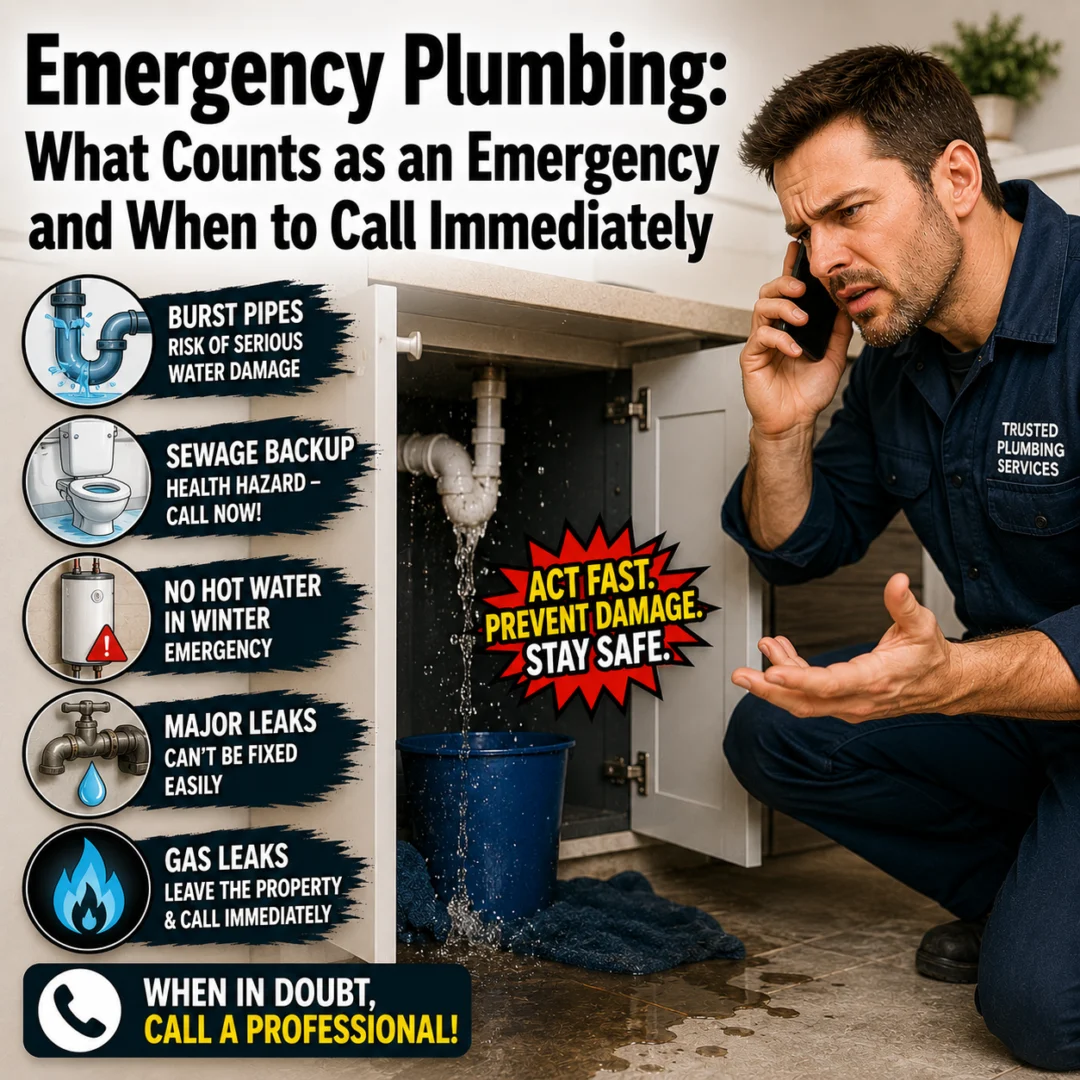
1. Burst Pipes
A burst pipe is one of the most urgent plumbing emergencies. Water can spread rapidly through floors, ceilings, and walls, causing major damage in minutes.
What to do immediately:
- Turn off the water at the stop tap
- Turn off electrics if water is near sockets or lights
- Call an emergency plumber straight away
2. Major Leaks or Water Pouring Through Ceilings
If water is dripping or pouring through a ceiling, it’s a sign of a serious leak. This can quickly lead to structural damage, mould, and electrical hazards.
This is always an emergency — don’t wait.
3. No Heating in Winter
In the UK, losing heating during cold weather can be dangerous, especially for:
- Families with young children
- Elderly people
- Anyone with health conditions
If your boiler won’t fire up and it’s cold outside, call a heating engineer as soon as possible.
4. No Hot Water
While not always an emergency, no hot water becomes urgent if:
- You have vulnerable people in the home
- It’s linked to a boiler fault
- You can smell gas or see error codes
If you’re unsure, it’s safer to call a professional.
5. Sewage Backing Up
If sewage is coming up through toilets, drains, or sinks, this is a serious health hazard. It can be caused by:
- Blocked drains
- Collapsed pipes
- Main sewer issues
This requires immediate attention from a professional.
6. Gas Smells or Carbon Monoxide Alarm Going Off
This is the most serious emergency of all.
If you smell gas:
- Leave the property
- Call the National Gas Emergency Service
- Do NOT use electrical switches
- Do NOT try to fix anything yourself
Once the property is safe, a Gas Safe registered engineer can inspect and repair the system.
7. Overflowing Toilets
If your toilet is overflowing and you can’t stop it, this can quickly cause water damage and hygiene issues. If plunging doesn’t help, call a plumber immediately.
8. Frozen Pipes
Frozen pipes can burst without warning. If you notice:
- No water coming from taps
- Frost on exposed pipes
- Strange noises when turning taps on
…it’s important to get a professional to thaw and inspect the system safely.
When It’s Not an Emergency
Some issues can wait for a standard appointment, such as:
- Slow draining sinks
- Dripping taps
- Radiators needing bleeding
- Low boiler pressure (unless it keeps dropping)
If you’re unsure, a quick call to a professional can help you decide.
Final Thoughts
Plumbing and heating emergencies can be stressful, but knowing what to look for helps you act quickly and protect your home. When in doubt, it’s always safer to speak to a professional — especially if water, gas, or heating failure is involved.